
I love you in Turkish: sevmek, hoşlanmak, beğenmek
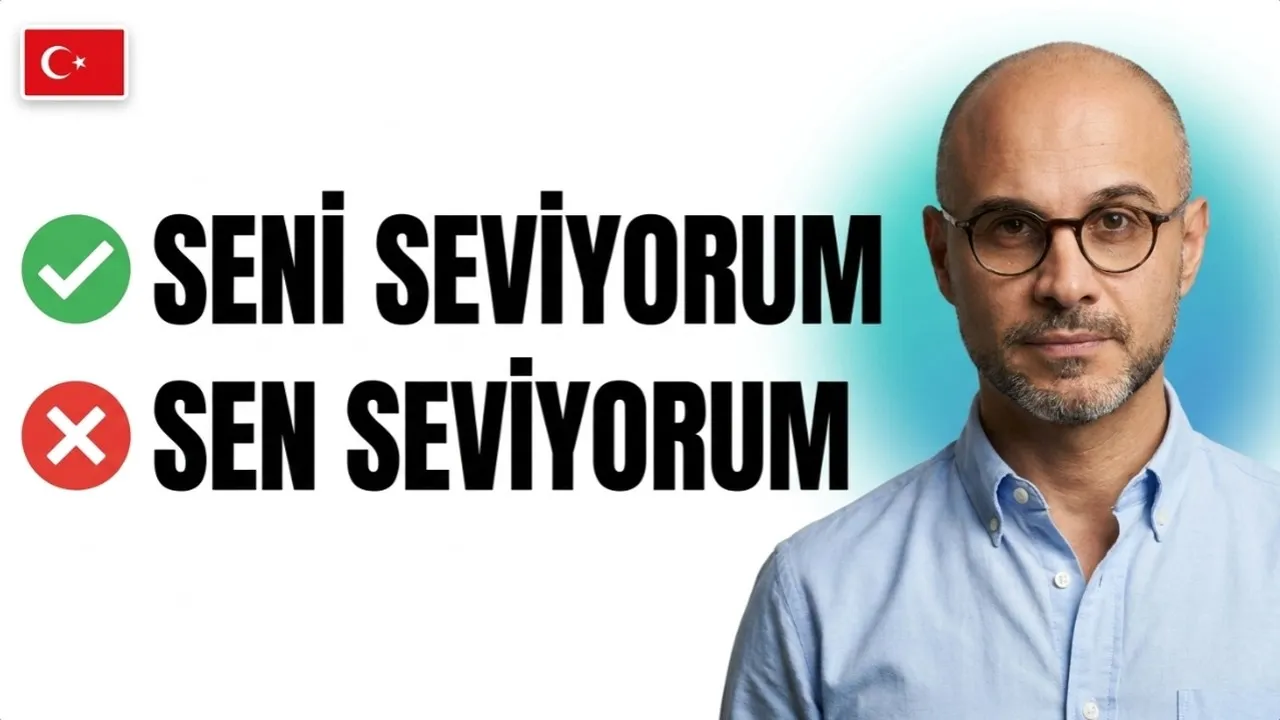
Seni seviyorum is one of the best-known Turkish sentences; you hear it in almost every episode of a Turkish series. But Turkish has several verbs for love and liking, and each one needs a different case ending. In this article I cover how seni seviyorum is built, the difference between sevmek, hoşlanmak, beğenmek and âşık olmak, and the terms of endearment you hear every day.
1. Seni seviyorum: how the sentence works
| Part | What it does |
|---|---|
| seni | the pronoun “sen” (you) takes the accusative: the person who is loved |
| seviyor | the verb “sevmek” (to love), present continuous |
| -um | personal ending: I |
Why seni and not sen? The person you love is a definite object, and a definite object takes the accusative case. I explain this rule step by step in the video on the accusative case.
In Turkish you do not need to say the subject; the ending -um already means “I”. Ben seni seviyorum is also correct, but saying ben adds emphasis: “It is me who loves you.”
- Seni çok seviyorum. (“I love you very much.” Çok comes before the verb.)
- Ben de seni seviyorum. (“I love you too.”)
- Seni seviyorum, anne. (“I love you, Mom.” It is said to family too.)
For the rules of the present tense, see the article on the present continuous.
2. Seviyorum or severim?
| Sentence | Meaning |
|---|---|
| Seni seviyorum. | A declaration of love; the feeling now. |
| Seni severim. | Lighter and more general: “You are a good person, I feel warmly toward you.” Can be said to a friend. |
| Çayı severim. / Kahveyi sevmem. | “I like tea.” / “I don’t like coffee.” General taste and habit. |
The logic: -iyor describes a feeling now, -r (the aorist) describes something general. To say “I love you”, use seviyorum.
3. Four verbs, three case endings
| Verb | Case | Example | Meaning |
|---|---|---|---|
| sevmek | -ı / -i (accusative) | Seni seviyorum. | love |
| beğenmek | -ı / -i (accusative) | Kitabı beğendim. (“I liked the book.”) | to judge something and find it good |
| hoşlanmak | -dan / -den (ablative) | Ondan hoşlanıyorum. (“I like him/her.”) | interest, enjoying |
| âşık olmak | -a / -e (dative) | Sana âşık oldum. (“I fell in love with you.”) | being in love |
To review the case endings, see the article on Turkish cases.
4. Beğenmek or hoşlanmak?
Both verbs are close to “to like”, but they are used with different things:
| Verb | Used with | Examples |
|---|---|---|
| beğenmek | objects, works, appearance | Kitabı beğendim. Filmi beğendim. Elbiseni çok beğendim. (“I really like your dress.”) |
| hoşlanmak | people, activities, situations | Ondan hoşlanıyorum. Yüzmekten hoşlanırım. (“I enjoy swimming.”) Bu şakadan hoşlanmadım. (“I didn’t like this joke.”) |
For a book or a movie, the most natural verb is beğenmek: Kitabı beğendim. Hoşlanmak is also used (Sıcak havadan hoşlanmıyorum, “I don’t like hot weather”), but it mostly means enjoying something in general. Hoşlanmak about a person usually means a romantic interest: Ali, Ayşe’den hoşlanıyor. (“Ali has a crush on Ayşe.”)
Three sentences show the degrees:
| Sentence | Degree |
|---|---|
| Ondan hoşlanıyorum. | interest (“I like him/her.”) |
| Onu seviyorum. | love (“I love him/her.”) |
| Ona âşığım. | being in love (“I’m in love with him/her.”) |
5. Seni özledim and other words of love
- Seni özledim. (“I missed you.” Özlemek also takes the accusative: seni, annemi, evimi.)
- Sensiz yapamam. (“I can’t live without you.”)
- İyi ki varsın. (“I’m so glad you exist.” To a partner, family, friends; a very warm thank-you and word of love.)
- Kendine iyi bak. (“Take care.” When saying goodbye; also in the article on greetings.)
6. Terms of endearment: aşkım, canım, hayatım
| Word | For whom? |
|---|---|
| aşkım (“my love”) | a partner, a spouse |
| canım (“my dear”, literally “my soul”) | a partner, a spouse; mothers say it to children, close friends to each other |
| hayatım (“my life”) | a partner, a spouse |
| sevgilim (“my darling”) | a partner |
| tatlım (“sweetie”) | a partner; sometimes a friend or a child |
In all of these, -ım / -im is the possessive ending: aşk-ım “my love”, can-ım “my soul”. In Turkish series you hear aşkım and canım most often; canım is used so widely outside romance that it does not always have a romantic meaning.
7. Common mistakes
| Wrong | Right | Why |
|---|---|---|
| Sana seviyorum. / Sen seviyorum. | Seni seviyorum. | Sevmek takes the accusative (more in the video). |
| Seni âşığım. | Sana âşığım. | Âşık olmak takes the dative. |
| Onu hoşlanıyorum. | Ondan hoşlanıyorum. | Hoşlanmak takes the ablative. |
| Filmden beğendim. | Filmi beğendim. | Beğenmek takes the accusative. |
| Seni çok seviyorum çok. | Seni çok seviyorum. | Çok once, before the verb. |
| Sana aşığım. (in writing) | Sana âşığım. | Standard spelling: âşık. |
Test yourself
5 questions
"Ben de seni ___." (sev-, present continuous)
Answer:seviyorum. The reply to "I love you": ben de seni seviyorum.
"Ayşe'___ hoşlanıyorum."
Answer:-den. Hoşlanmak takes the ablative: Ayşe'den.
You leave the movie theater; the movie was great. What do you say?
Answer:Filmi çok beğendim.. Beğenmek takes the accusative: filmi beğendim.
"Sana ___ oldum."
Answer:âşık. The verb used with the dative: âşık olmak.
What do you say to your mother on the phone?
Answer:Seni çok özledim, anne.. Love and missing someone in the family: seni özledim.
Next step
To review the endings these verbs take, see the article on Turkish cases. For all A1 topics, see the grammar guide. If you have a question, ask me or message me on Telegram.
If you get stuck anywhere in this topic, write to me.
Have a question about this lesson? Ask it here
Read next
Sorry in Turkish: özür dilerim and "I didn't understand"
Sorry in Turkish: özür dilerim, kusura bakmayın, affedersiniz and pardon, how to reply to an apology, anlamadım and tekrar eder misiniz, mistakes and a quiz.
Turkish restaurant phrases: çok lezzetli, hesap lütfen
Turkish restaurant phrases: getting a table, calling the waiter, ordering, saying it is delicious, afiyet olsun and eline sağlık, the check and a quiz.
Shopping in Turkish: kaç para, ne kadar?
Shopping in Turkish: asking the price with kaç para and ne kadar, on liraya aldım, bargaining, sizes, paying, change and wishes, common mistakes and a quiz.
Good wishes in Turkish: kolay gelsin, geçmiş olsun, afiyet olsun
Good wishes in Turkish: iyi günler, kolay gelsin, geçmiş olsun, afiyet olsun and happy birthday (iyi ki doğdun); when to say each, replies, mistakes and a quiz.